

Forex vs Futures Trading: Why Your Choice Matters
Trading is already hard enough. Choosing the wrong prop firm model can make it a lot harder to get funded capital and make the most out of your trading.
There are tons of different traders: swing traders, scalpers, forex or crypto traders, futures traders, etc. While both Futures and Forex prop firms have great choices, the way they operate and the type of traders they reward are completely different.
In this article, you’ll learn the key differences between Forex and Futures prop firms, which one matches your style, and how to choose the right one before you sped your money and time going through an evaluation.
What’s the difference between Forex and Futures Prop Firm Trading?
Forex Prop Firms
Forex prop firms are technically called CFD (Contract for Difference) firms, but are just widely referred to by traders as “Forex prop firms”.
CFD trading lets you speculate on price movements without owning the underlying asset. You’re essentially making a bet with your broker about price direction. Compared to futures prop firms, Forex prop firms offer more products with greater customization: Forex, Crypto, Indices, and Commodities, with 24-hour trading.
The most important detail in Forex prop firms is that you’re always trading a CFD of the asset, not the actual underlying asset.
Brokers and Trading Platforms
Forex prop firms claim to be using “in-house liquidity providers”, which is why their broker charts almost never match the most widely used TradingView charts. Every Forex prop firm and its broker will:
- Have its own ticker for the CFD of the underlying asset you’re trading: The ticker for the NASDAQ Index in FTMO is US100 and NDX100 in Funding Pips.
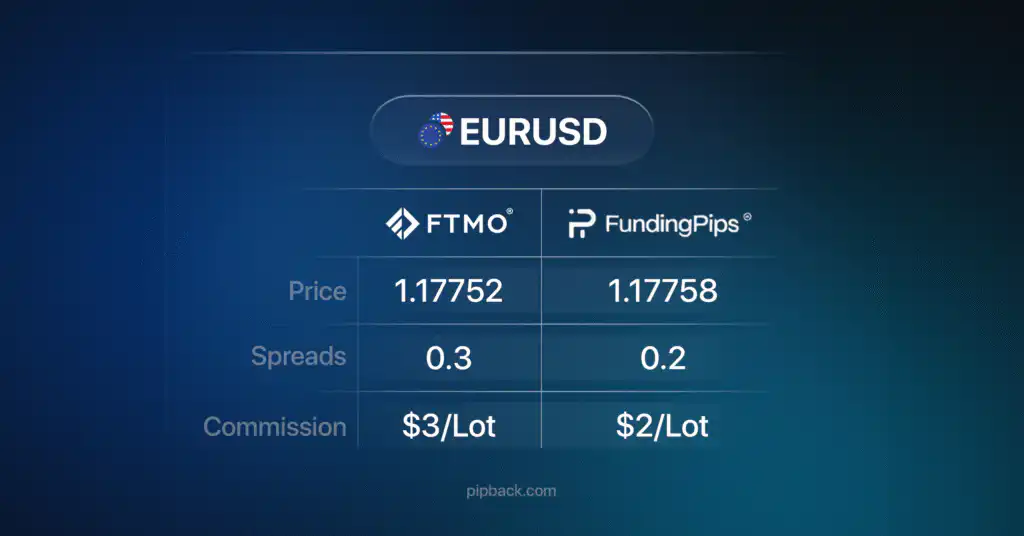
- Choose their own spreads & commissions, and show a different price for every pair you’re trading: Below is one of the most popular trading pairs, EURUSD. This is how it looks in terms of price and spreads in FTMO and Funding Pips, two of our most popular prop firm partners, at the time of writing:
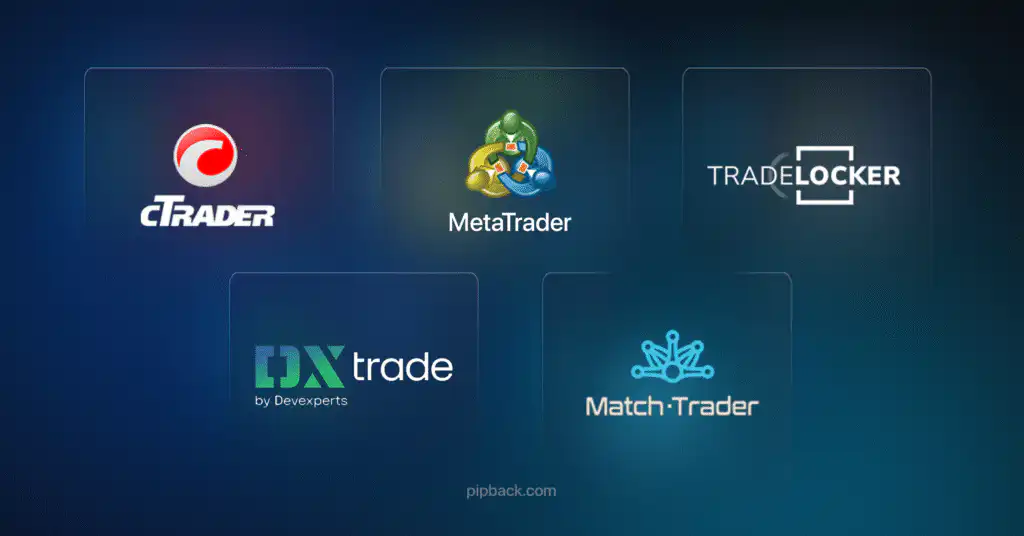
- Offer different trading platforms for traders
PipBack recommends doing your charting and analysis on the most widely used CFD brokers on TradingView (Forex.com, FXCM, IC Markets, Pepperstone, etc), and using your prop firm broker charts only for trade execution.
Position Sizing & Trading Rules
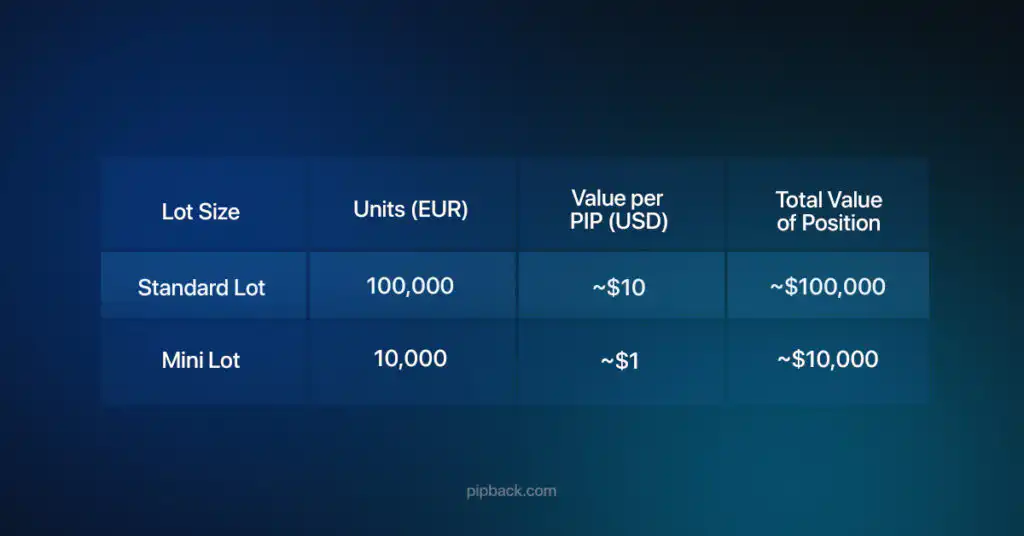
Forex prop firms offer greater position sizing customization compared to Futures prop firms. Traders can work with mini and standard lot sizes, which makes adjusting the risk per trade a lot easier. You can work with round and decimal numbers and risk anywhere from 0.1% to 1-2% per trade (depending on the prop firm’s rules).
Forex prop firms have fewer and simpler to follow trading rules. Coupled with the ability to trade a lot more instruments than in Futures prop firms, they are usually more attractive to traders.
As of 2025, most of them have similar rules, so they are easy to understand and follow. The most common trading rules are:
- News Trading: Prop Firms don’t allow entries in a 10-minute window surrounding high-impact news events. This includes opening or closing a trade 5 minutes before and after a high-impact news event. This rule usually applies only to the funded phases.
- Balance-Based Maximum & Daily Drawdowns: The industry standard is 10% Maximum and 5% Daily Drawdown for Forex prop firm accounts. Most firms use balance-based drawdowns, so it’s very easy to calculate and keep track of.
- Trading Objectives: Forex prop firms have very easy-to-understand trading objectives. The profit targets are usually 8% in phase 1 and 5% in phase 2.
A combined Profit Target of 13% across phase 1 and phase 2, and 10% Maximum Drawdown results in a favorable PT:DD Ratio (Profit-to-Drawdown) of 0.77, calculated by dividing the Max. Drawdown to the sum of the Profit Targets.
The PT:DD Ratio compares how many percent you need to make in order to pass your challenge vs. how many percent you’re allowed to go into drawdown before you lose the account.
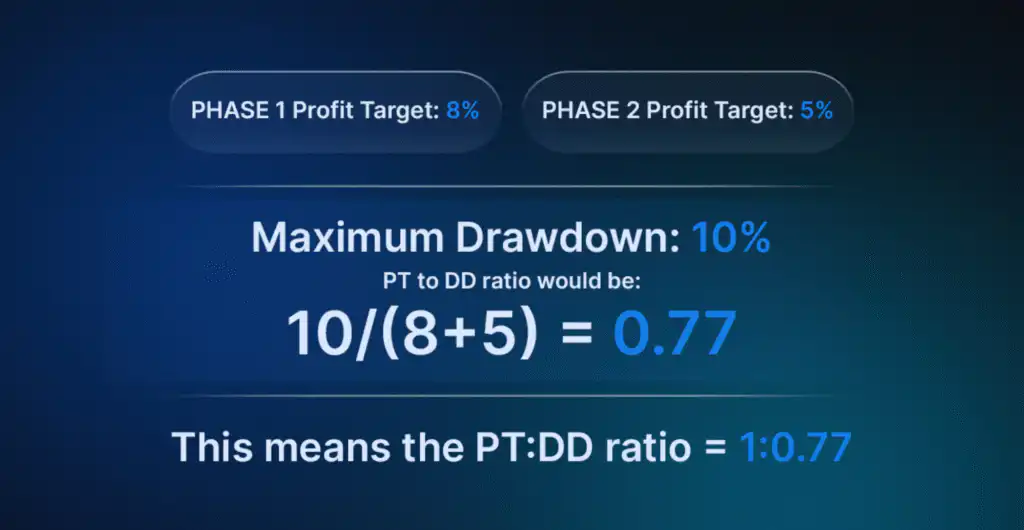
A higher PT:DD Ratio means you have more Drawdown leeway for your Profit Target, making it easier to pass the challenge. Conversely, a lower PT:DD Ratio means you must make more profit per unit of Drawdown allowed, which means a harder challenge.
- No Consistency Rules: Simply said, this means that you can hit a home-run trade and hit your Profit Target in just a few overall trades. You can then just stop trading and wait till you meet the Minimum Trading Days rule.
- Minimum Trading Days: Forex prop firms usually require you to have 5 to 10 trading days before you can pass your evaluation. This means that if you hit your Profit Target, but haven’t met this rule, you can’t pass until you stack up these trading days.
Fortunately, traders are allowed to just open and close 0.1 lot trades and meet this rule.
Payments & Discounts
- One-Time Payments: As opposed to Futures, Forex prop firms work with one-time payments. This means you purchase your evaluation account, and that’s it, you can trade it for as long as you want (unless you blow the account, of course).
- Low Barrier of Entry: For as little as $20, you can start off with a $5,000 prop firm challenge and trade all kinds of markets.
Futures Prop Firms
A Futures prop firm only offers products found on American futures exchanges. Currency pairs are limited to the major pairs like the British Pound, Euro, and Japanese Yen, with crypto being limited to Bitcoin and Ethereum.
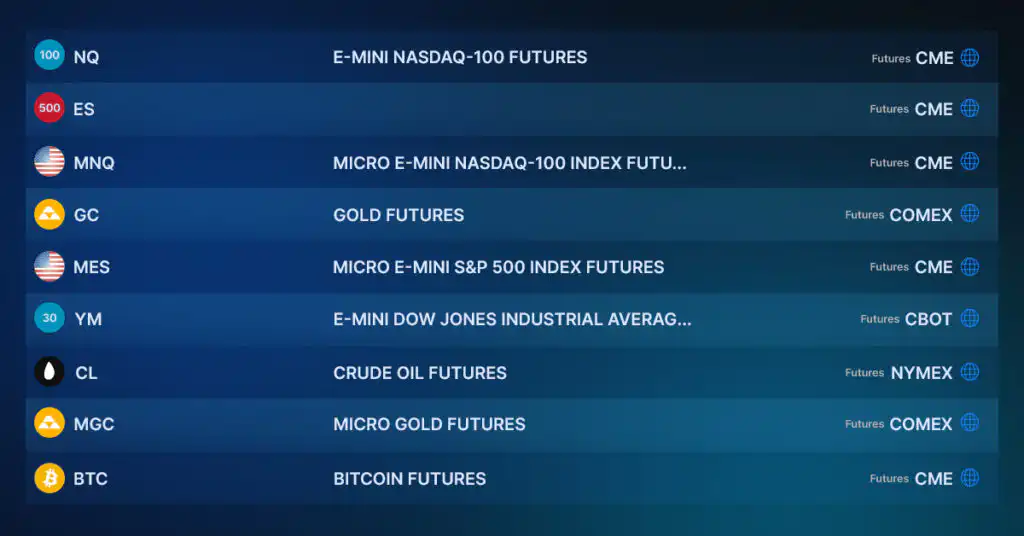
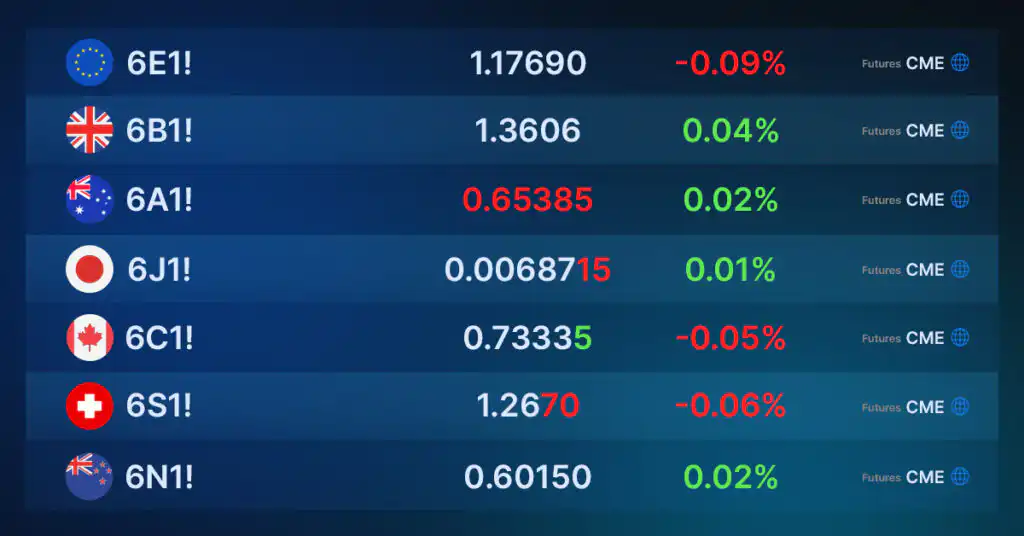
Futures prop firms are popular among traders who seek to trade the high volatility of the indexes: S&P500, NASDAQ100, GER40, etc. These traders often focus on 1-2 Futures pairs.
Additionally, Futures don’t have 24-hour markets. Positions are closed out on a daily basis. Lot sizes customization is also limited, where one can only choose between Mini and Micro contracts.
While each prop firm sets its own standards, a common theme in many trading communities is that Futures prop firm challenges tend to be easier to pass when compared to Forex prop firms because of their frequent “1 day to pass” promotions.
The CME Group offers great education on Futures trading, which PipBack recommends going through if you plan on trading with Futures prop firms.
Brokers and Trading Platforms
With Forex prop firms, the spread and the commissions are set by the broker, and the price feeds will differ depending on the data feed.
All Futures prop firms rely on universal data feeds, coming from the CME (Chicago Mercantile Exchange), NYMEX (New York Mercantile Exchange), and EUREX (European Exchange). This means that all Futures traders see and trade the same exact price action.
The advantage of a centralized exchange like this is that orders are matched and guaranteed to be settled. This means full transparency to contract pricing and no spreads.
Futures prop firms use different trading platforms from Forex ones. The most popular one among Futures prop firm trading is Tradovate, since it can be connected to TradingView, and traders can execute directly in their favorite charting software.
Futures prop firms also offer NinjaTrader and Rithmic as trading platforms.

A benefit of Futures prop firms is that you get a free CME data package with your evaluation purchase, which costs $8 if bought separately.
Without these data packages, your TradingView futures chart will have a 10-minute delay, which is detrimental to lower-timeframe trading and scalping.
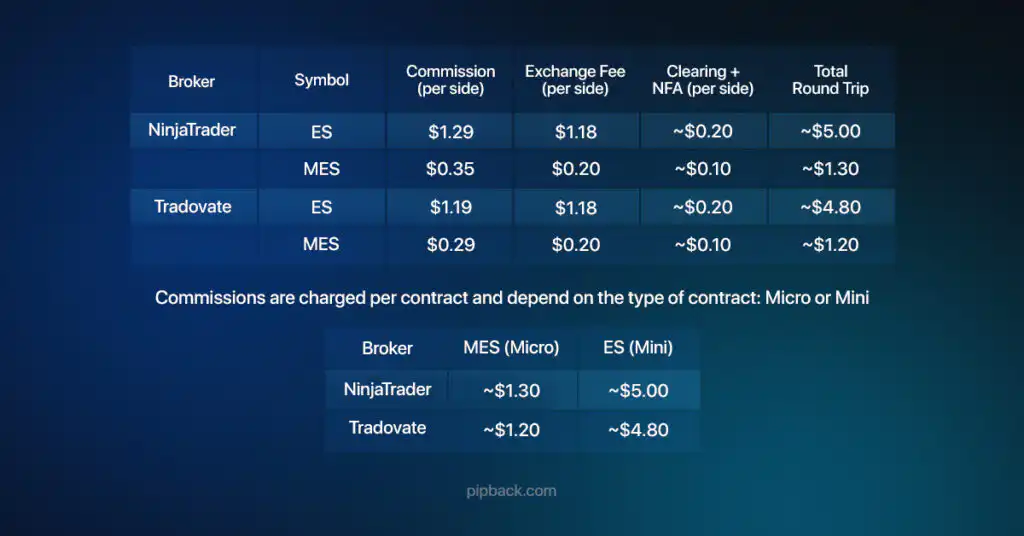
The commissions are comprised of a few factors, but are a lot lower than in Forex prop firms as well. Here’s a short breakdown of how commissions work:
Position Sizing & Trading Rules
Unlike lot sizes in Forex, Futures prop firms work with Mini and Micro contracts. Contracts represent a chunk of the index’s value and you can only work with whole numbers
- $50 per point for ES, and $20 per point for NQ with Mini contracts
- $5 per point for ES, and $2 per point for NQ with Micro contracts
This means traders must calculate their risk per trade based on their predefined stop loss size and select the appropriate number of contracts to trade with.
PipBack always recommends rounding down the risk per trade. For example, if you want to risk $500 per trade and the closest to that is 5 Mini NQ contracts, equal $550, round it down to 4 Mini contracts even if that’s worth only $450.
Futures prop firms have a lot more and complex rules than Forex prop firms. The overall evaluation structure is different, and we often have only 1 phase to pass, and while news trading is allowed, there are a lot more things to take into account.
- Trailing Drawdown (Realized/Unrealized): Futures prop firms usually work with a trailing drawdown. This means that your drawdown trails the highest point of your account balance as it increases. In cases where your trailing drawdown is unrealized, your drawdown trails your highest account equity, even if the trade ends up at a loss or breakeven. This approach requires stricter risk management and forces traders to either aggressively trail their stop loss or aim at a smaller risk-to-reward ratio.
- Trading Objectives: Most Futures prop firms have a Profit Target of 6%, but it’s the Profit-to-Drawdown Ratio (PT:DD) that traders should pay the most attention to when comparing them to Forex prop firms. Futures prop firms have less favorable PT:DD Ratios than Forex prop firms, often it being 0.5, where for a Profit Target of 6% you only get 3% of drawdown.
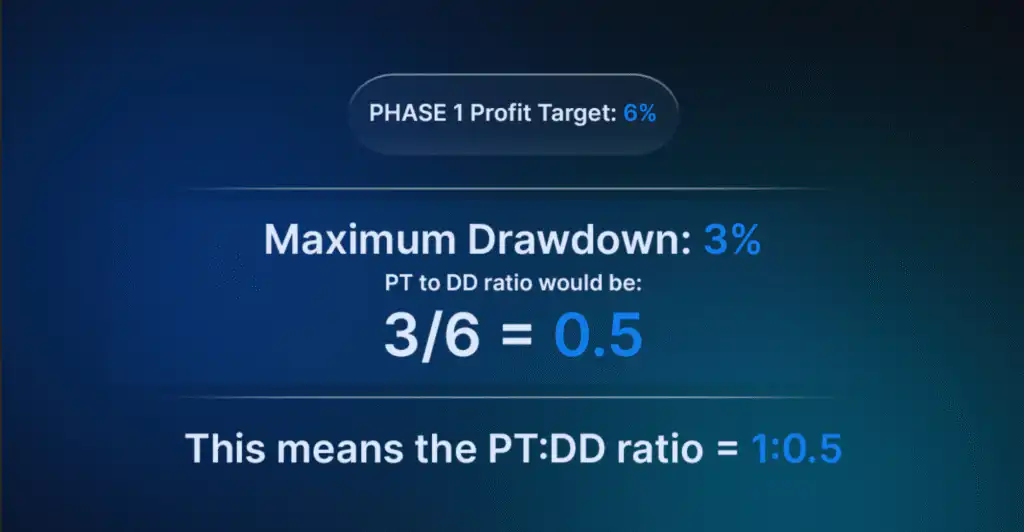
The lower the ratio, the tougher the challenge, as traders have less drawdown to risk, compared to the profit target. The rule of thumb is: the closer the ratio to 1, the easier the challenge.
PipBack recommends paying more attention to the $50,000 Futures prop firm challenges. Firms usually offer a better PT:DD ratio on their smaller accounts.
- Consistency Rules: A Consistency Rule means that a trader’s profit on any single day cannot exceed a percentage of the total profit target, usually 20-40% depending on the Futures prop firm. If it does, the profit target will increase accordingly, and traders will need to continue trading until this rule is met.
According to Futures prop firms, this rule:
-
- Encourages stable, repeatable profitability instead of relying on a single high-profit day.
- Prevents over-leveraging and erratic trading behaviors.
- Develops disciplined trading habits essential for long-term success.
- Contract Size Consistency: This means that contract sizes should reflect a consistent trading approach. Erratic spikes or inconsistent changes to your position sizing, like trading 10 contracts one day and then 2 contracts the next, are a breach of this rule.
- Risk Limitation: Some Futures prop firms have a risk limitation rule, which means that your open trades should not show a negative P&L (Profit and Loss) exceeding a certain percentage of your start-of-day profit. This applies to both individual trades and the combined value of all open orders and is usually between 20% and 30%. For example, if you start the day with $10,000 in profit for a $150,000 account, your open negative P&L should not exceed $3,000 (30% of $10,000).
Payments & Discounts
- Subscription Fees: Unlike Forex prop firms, where you can just buy a challenge by paying once, Futures prop firms rely on a subscription fee. This means that you’re paying a monthly fee for your evaluation account, and the longer you take to pass the challenge, the more expensive it becomes. Then you also have to pay an “activation fee” once you pass the evaluation stage to activate your funded account. You can also “reset” your account for a fee if you lose it, which ends up being cheaper than buying a new account.
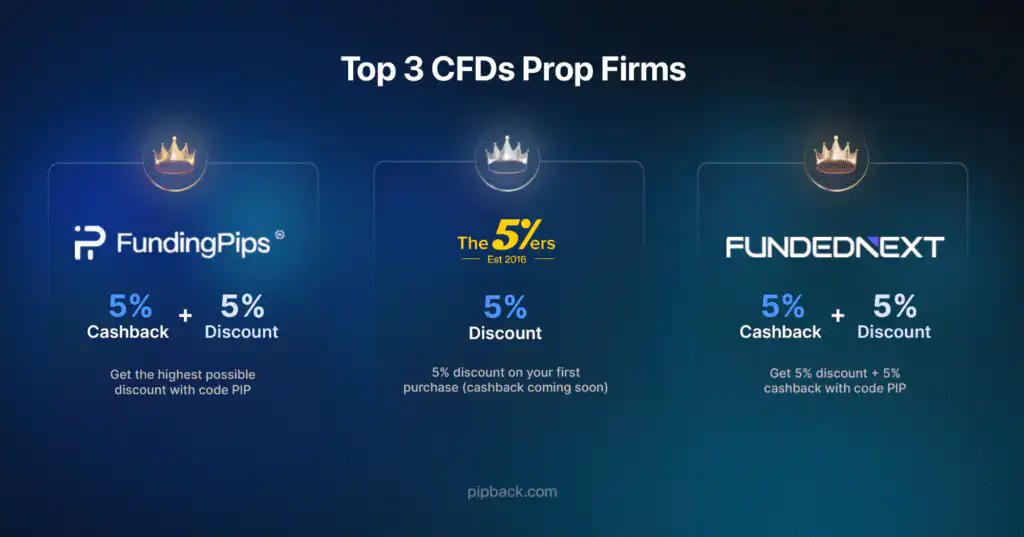
- Discounts: Recurring payments are hard on the wallet, so we at PipBack have got you covered. We have partnered with the best Futures prop firms to offer you the highest possible discounts when you buy an account.
Forex vs Futures Prop Firms: Pros & Cons
Both Futures and Forex prop firms offer great opportunities for traders to acquire and trade with large capital. In the end, they are meant for different types of traders and fit different trading strategies.
Here’s a summary of everything important you need to remember when deciding which route to go:
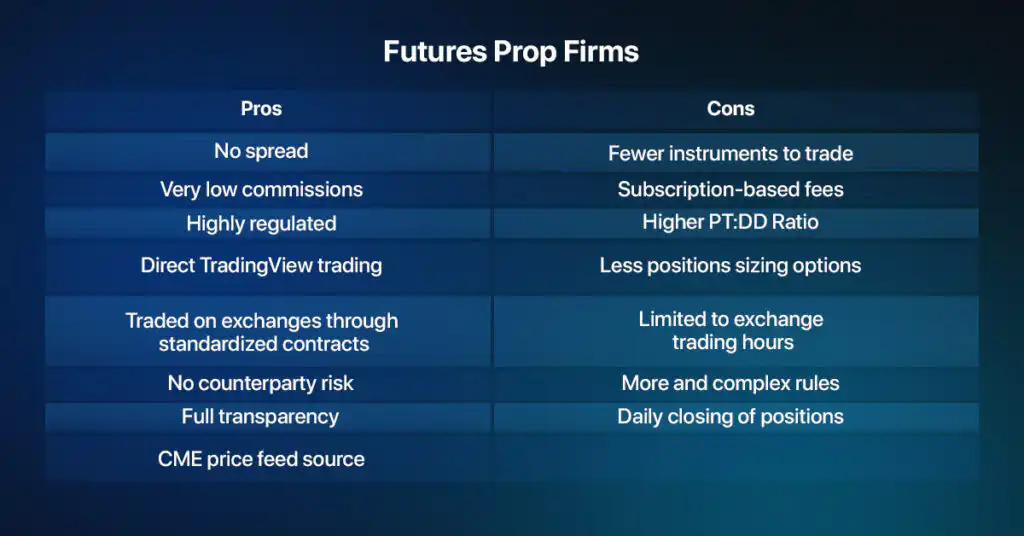
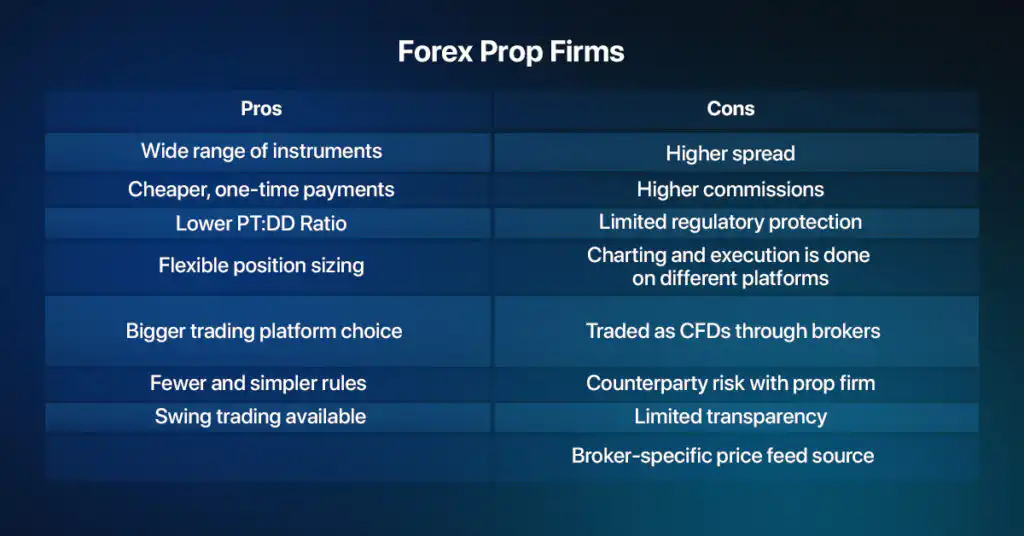
Whether you go with a Futures or Forex prop firm, PipBack’s here to help you out.
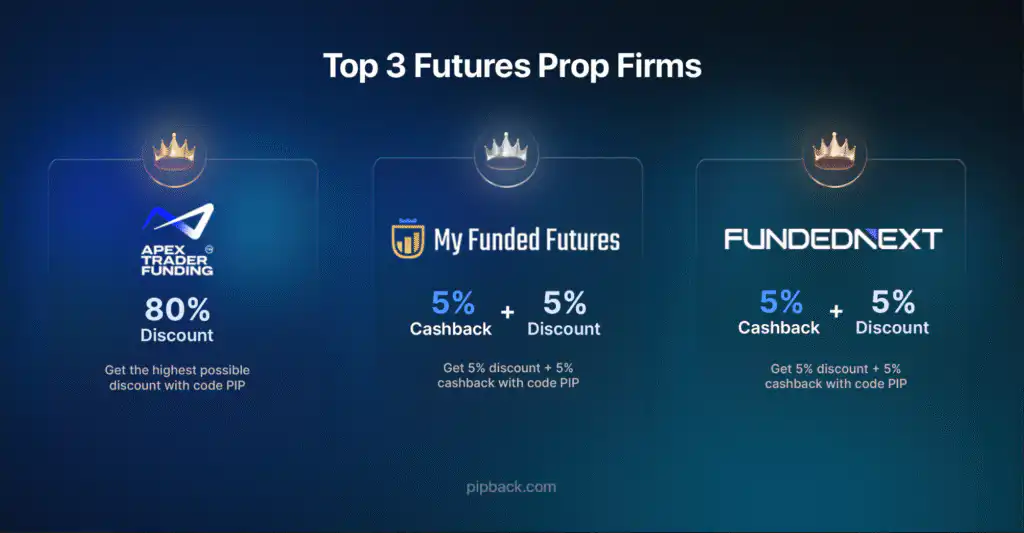
Check out our top 3 most popular Futures and Forex prop firms. We offer the highest discounts in the industry for your purchases.
FAQs
- What is the best prop firm for beginners?
The choice between Futures and Forex prop firms depends on your trading strategy, lifestyle, and experience level. If you are a beginner, going with Forex/CFD firms may be a better option due to their simpler trading rules, flexible position sizing, and variety of evaluation accounts.
- What’s the difference between Forex and Futures prop firms?
Forex prop firms let you trade CFDs on a wide range of instruments and offer a bigger trading platform choice, using platforms like MetaTrader, TradeLocker, or cTrader. They have higher spreads and commissions compared to Futures prop firms and are less regulated. Futures prop firms offer trading in standardized contracts on the S&P 500, NASDAQ, Currency Futures, Energy Futures, etc. They are highly regulated and traded on centralized exchanges, offering platforms like NinjaTrader, Tradovate and trading directly through TradingView.
- Are Futures prop firms safer than Forex prop firms?
Futures are highly regulated with standardized contracts and are traded on centralized exchanges, like the Chicago Mercantile Exchange (CME). They are considered less risky for retail traders due to greater regulation and transparency. Forex is decentralized and less regulated than Futures. The level of regulation varies by country, which can affect transparency and trader protection.
- What’s cheaper: Futures or Forex prop firms?
Futures prop firms often run promotions with high discounts. But they rely on subscription-based fees. These add up if you take longer to pass their challenges because of their stricter rules. Forex prop firms rely on one-time payments and offer a wider range of account sizes, some starting from as low as $25.