
Prop firms have lowered the barrier to entry for traders tremendously, but you don’t want to get caught buying from a bad prop firm and throwing money for challenge fees out the window.
Just like prop firms that aim to help traders enter the industry and offer funding, there are prop firms that prey on failing traders and will do anything to keep the money coming into their pockets.
Here’s how to tell the two apart and not waste time and money on bad actors in the industry.
What Makes a Prop Firm Good?
Before we review the red flags you need to watch out for, let’s quickly go over everything that makes a prop firm good.
Every prop firm should at least have the following:
- Transparent and Clear Evaluation Rules
- Responsive Customer Support
- No Hidden Costs and Straightforward Fee Structures
- Reasonable Slippage and Spreads
This is the bare minimum you should look for. Let’s go over everything that should raise a red flag in a prop firm next.
Red Flags in Prop Firms
1. Anonymous Team and Lack of Transparency

A reliable and credible prop firm will be public about its leadership team and who’s behind the company. The founders should be actively involved in discussions about the prop firm industry and should be working on improving whatever they can for the benefit of their traders.
A prop firm with a fully anonymous team without any online presence raises serious concerns about the company and its owners’ intentions.
This is still not a guarantee, as many might remember how The Funded Trader’s founders sued each other in 2023. But it’s a step forward since there are people to be held accountable in case something happens with the prop firm.
2. Bad Rating on Social Media Platforms and TrustPilot
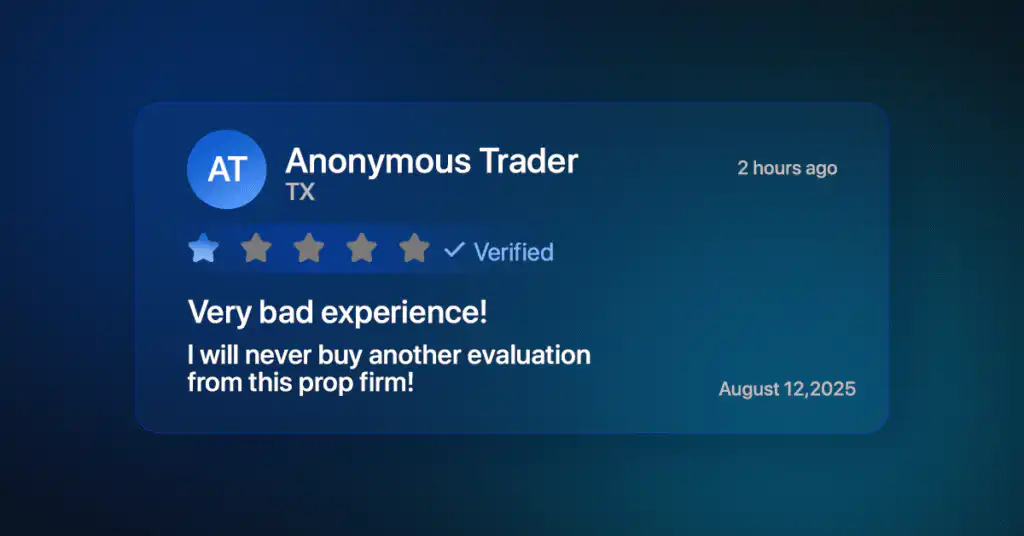
Sooner or later, the truth always comes out. People who have a negative experience will always leave a review and share their story on Social Media or on the prop firm’s TrustPilot page.
Before choosing a prop firm to trade with, go over their Social Media channels and read through what other traders have to say about them.
3. Fake or Botted Reviews and Misleading Marketing

We always recommend looking at the bad reviews first because no one pays for fake bad reviews.
A lot of prop firms buy good reviews from bots or just pay people for nice ratings. This skews their online rating and makes it look better than it actually is.
Aside from this, many firms often run misleading marketing campaigns. Both of these should be an instant red flag for you.
4. Inconsistent Pricing, Constant Promotions and Discounts

For example, FTMO has never relied on flashy promotions or any discounts since 2015, yet they have remained one of the most respected and reliable firms for a decade now.
They have their prices set in stone and offer great trading conditions in return, no compromises.
Prop firms that constantly run huge discounts and promotions can’t do that sustainably over the long run, and that starts raising concerns as to why they are always doing it in the first place.
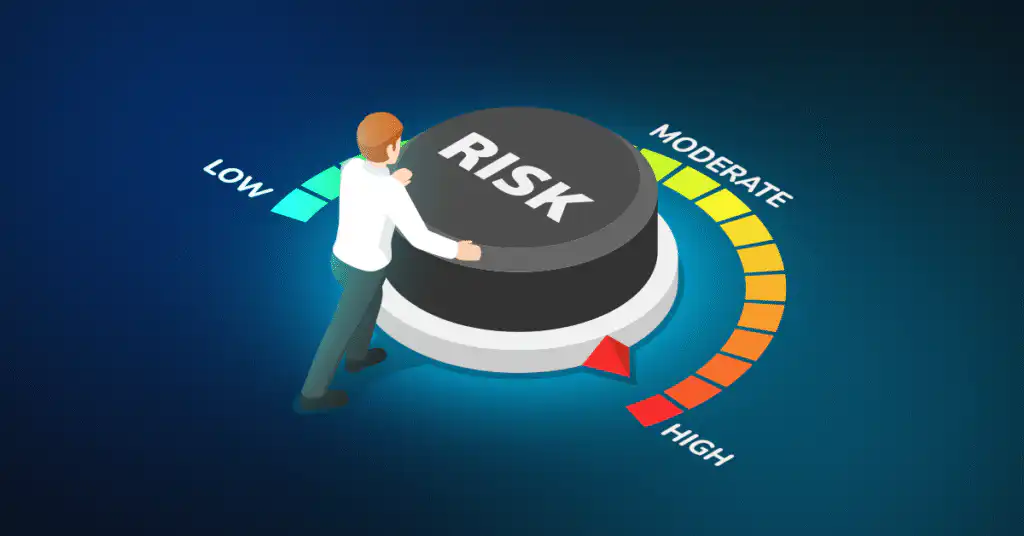
5. Unreasonable Risk Management Rules
Prop firms already impose strict risk management rules with their Max. and Daily Drawdowns, trailing drawdown, and many more.
If you’re suddenly suspended or even banned for risking 1% per trade because you found a high probability opportunity, reconsider trading with this prop firm going forward.
There’s nothing crazy about risking 1% per trade.
6. Payout Delays and Denials for Made-Up Reasons
It’s every trader’s goal to get to their first payout and then remain consistent with payouts over the long term.
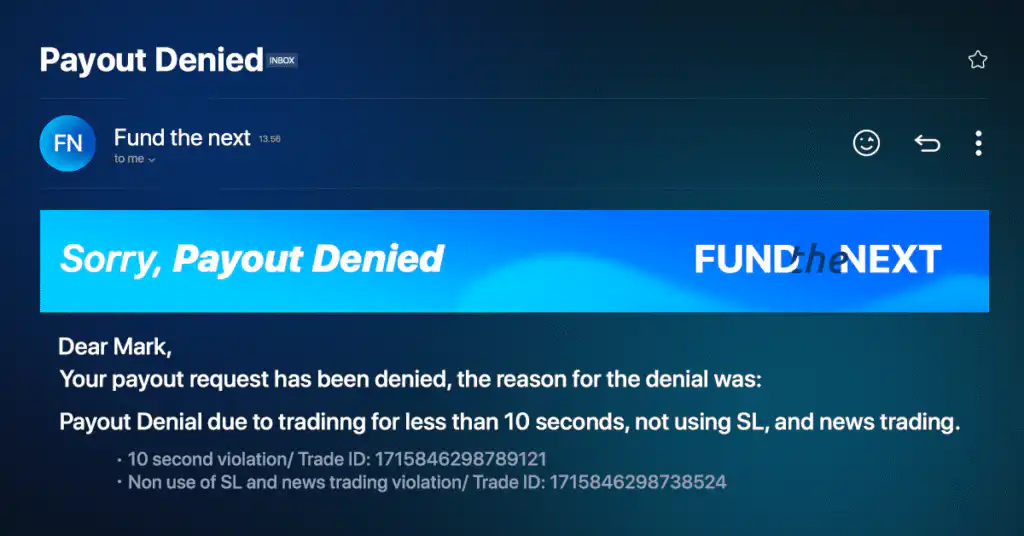
The worst thing that could happen is getting your payout delayed and eventually, even denied, for no legitimate reason. Believe it or not, this is a frequent case in many prop firms.
Bad prop firms will make up any reason whatsoever to deny your payout, inventing and quoting imaginary rules that you somehow breached.
Keep an eye out for people leaving reviews about suspicious payout denials, this is often very vocal and gains traction on Social Media.
7. Lack of Transparent Evaluation Rules
This goes hand in hand with prop firms making up reasons to deny your payout. Suddenly, there’s a rule about having a mandatory Stop Loss of at least 10 pips, or a risk per trade limit at 1% which you overshot by 0.05%.
Any rules that are not stated before you purchase the challenge or in the prop firm’s documentation, that are made up on the go, are an instant red flag and just another reason to skip this prop firm when choosing your next evaluation purchase.
8. Hidden Costs
Aside from the initial challenge fee, the only cost to trade with a prop firm should be commissions.
Different spreads from what’s initially mentioned, increased slippage at random parts of the day, or any other costs are hidden costs that traders shouldn’t have to pay.
Remember, all prop firm trading is done in a simulated market environment, so slippage, spreads, commissions, and everything is entirely in control of the prop firms.

9. Lack of Customer Support
Imagine what will happen when your withdrawal is delayed or your payout is denied, and the prop firm’s support team is nonexistent or avoids technical questions.
Reliable firms offer timely and thorough support, which aims to resolve your issues as fast as possible.
If you have to wait for a support member to get in touch with you for days, the firm is not taking its Customer Support department seriously. Any reply above 24 hours is unreasonable.
A legitimate company will always aim to have amazing customer support since this is the first touch point between clients and the company.

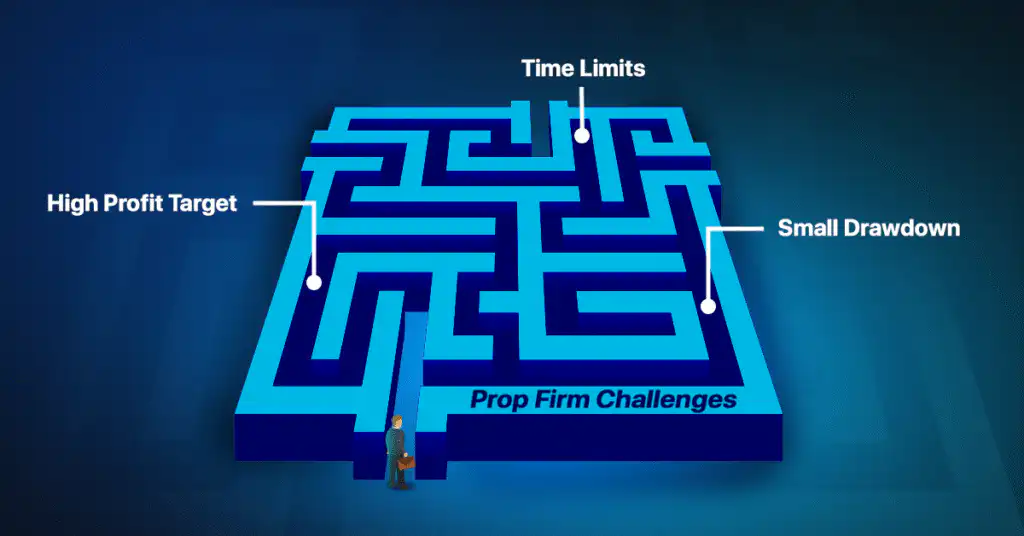
10. Unrealistic Profit Targets and Time Limits
We have long moved away from prop firm challenges with a time limit. Some prop firms refuse to do so and still set Profit Targets that are unreasonably high within very short timeframes.
For example, requiring traders to hit 10–15% profit in just 20 or 30 days, forcing them to take reckless trades or over-risk, which can then get them breached or banned.
Legitimate prop firms understand that consistent profitability is more important than short-term gains. If the evaluation rules push you to gamble rather than trade responsibly and with proper risk management, that’s a red flag.
Measure Twice, Cut Once
Or should we rather say “Plan twice, trade once”, which would be more fitting for prop firms.
Make sure to always double-check a prop firm for any of the red flags above before giving them your hard-earned money for an evaluation account.
We have partnered with a lot of legitimate prop firms to offer you the highest discounts in the industry with our discount code “PIP.”
FAQs
- What are the key factors to consider when choosing a prop firm?
Choosing the right prop firm can make a huge difference in your trading career.
Always look for prop firms that have realistic, clear, and fair trading rules, an adequate customer support team, few bad reviews, fast payouts, and a transparent team behind them.
- What are some red flags when choosing a prop firm?
Slow and denied payouts, lack of customer support, anonymous teams, hidden and unfair trading rules are all red flags you should be aware of when choosing a prop firm.
- Are all prop firms legit?
No. Some firms are just there to constantly sell challenges with unclear or restrictive rules, and profit from failing and struggling traders. Legitimate prop firms genuinely want to fund profitable traders. Look for a transparent team with clear trading and risk management rules, as well as a history of paying traders out.
If it feels too good to be true, it probably is.
- What to do if you were deceived by a prop firm?
Gather evidence: correspondence screenshots, receipts, trade history, if you were unfairly treated by a prop firm.
Consider making everything public and voicing your concerns, as well as filing an official complaint with the relevant authorities based in your jurisdiction.
Share a detailed review on the company’s Social Media channels to make other traders aware.