
The Biggest Money-Maker: Unprofitable Traders
The main income of prop firms will always remain challenge fees. Traders who constantly fail evaluation accounts and keep on buying new ones in an attempt to pass are a gold mine for prop firms.
Their entire business model relies on the fact that most traders are unprofitable.

The ESMA (European Securities and Markets Authority) obligates brokers to share their percentage of losing traders. As of 2025, nearly 80% of traders lose money while trading CFDs with brokers like OANDA, FXCM, Pepperstone, or Forex.com. This is publicly available information on their websites.
It’s no different in prop firms. Most traders fail challenges due to poor risk management, making upfront fees a major income source for prop firms. Couple the usual failure rate with the strict trading and risk management rules in prop firms, and the percentage might even exceed 80%.
The model differs a bit for Futures and Forex, since Futures prop firms rely on subscription fees to keep bringing in money, and they also offer evaluation resets, where you can reset a lost challenge for a bit cheaper than if you were to buy a whole new challenge.
But in the end, both Futures and Forex prop firms rely on traders failing as their main source of income.
Prop Firm Trading Profit Splits, A-Booking and B-Booking
Contrary to popular belief, prop firms don’t make any money from their profit split models.
Usually, a prop firm takes 10% to 30% of a trader’s payout, but since all trading is done on a simulated (demo) account, they aren’t really making any money. They are just not paying the trader an extra 10-30% of profits.
Unlike real brokers, prop firms don’t earn anything from spreads and commissions either. Since the entire trading is demo, spreads and commissions are there just to make it harder for the trader, as well as to simulate real market conditions.
What is A-Booking vs B-Booking?
Prop firms have an A-book and B-book model, but only the first one makes them money.
-
A-Book
Prop firms pass your trades to the real market (liquidity providers). They don’t take the opposite trades from you. They earn money from spreads & commissions, as well as copying your trades.
Getting A-booked is a very rare occasion. Traders must prove they are profitable over the long term and that they have very strict risk management. Only then will a prop firm consider A-booking someone and risking their capital on the same trades.
-
B-Book
In traditional trading, the broker keeps your trade in-house, acting as the counterparty and taking the opposite trades. If you lose, they profit — and vice versa. And they still earn from spreads and commissions.
Prop firms don’t do anything. They don’t place counter trades at all since their accounts are all simulated, and they don’t pass the trades to the real market since barely any traders are worth A-booking.
Instead, they just aim to profit from traders losing the evaluations in general.
Commissions and Spreads
Since all prop firm trading is done in a simulated environment, spreads and commissions are basically nonexistent. They are made up by the prop firms to simulate a live market and make it harder for a trader to pass their challenge.
This is also one of the reasons Futures prop firms have become so popular, there are no spreads and barely any commissions.
Slip Them to Hell
A lot of Forex prop firms abuse spreads and introduce a lot of slippage to their traders.
Slippage is when a trader receives a different trade execution price than intended. It occurs when the spread increases rapidly between the time a market order is placed and the time the broker/prop firm executes the order. If you want to learn more about it, check out our dedicated article here.
This causes traders to get filled at a worse price and lose more per trade when their Stop Loss order is slipped.
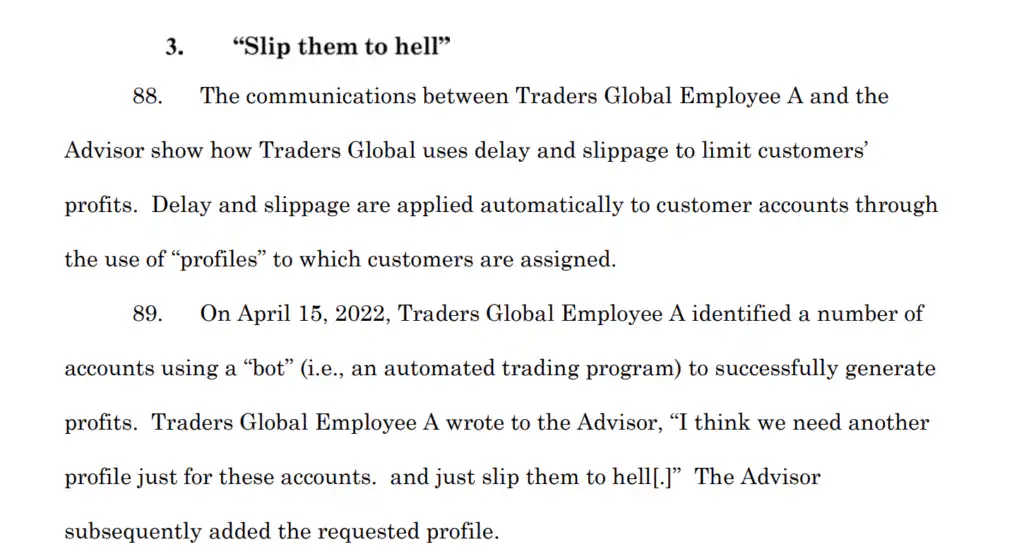
If you’ve been around since the My Forex Funds days, then you’re familiar with the infamous “Slip them to hell” phrase and how MFF employees intentionally manipulated slippage to limit trader profits. Below is a snippet of the official CFTC court case against My Forex Funds, including the Slip them to hell part:
How to Choose the Best Prop Firm and Make Money?
All prop firms rely on failing traders as their main source of income. What’s more important is how these prop firms invest this income and whether they are looking to improve their products.
FTMO, for example, has been expanding its prop firm into real estate and acquiring its own brokerage. Make sure that the prop firm you’re looking to buy a challenge from is investing in the company and looking to improve the conditions offered to its traders.
Here’s a list of PipBack’s top 3 Futures and Forex prop firms.
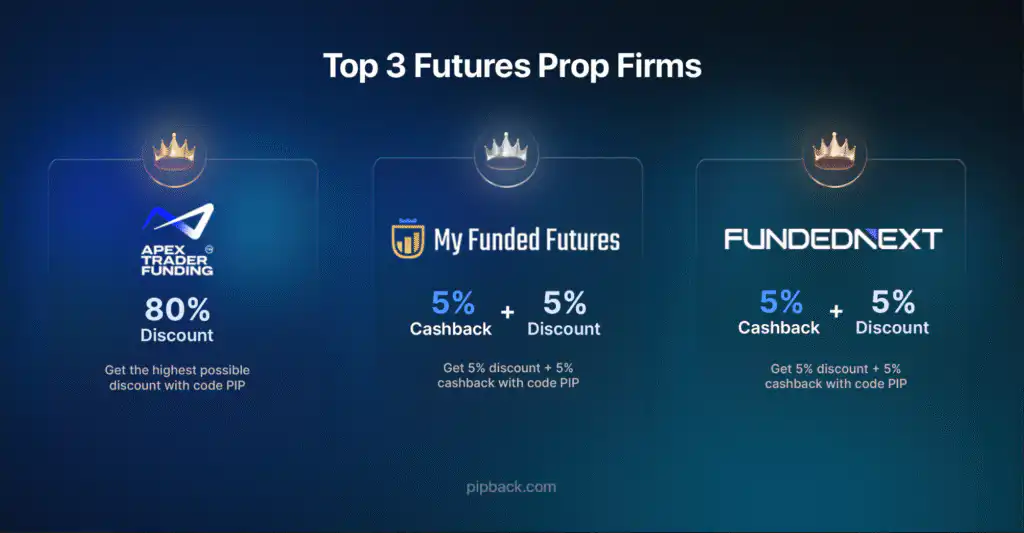
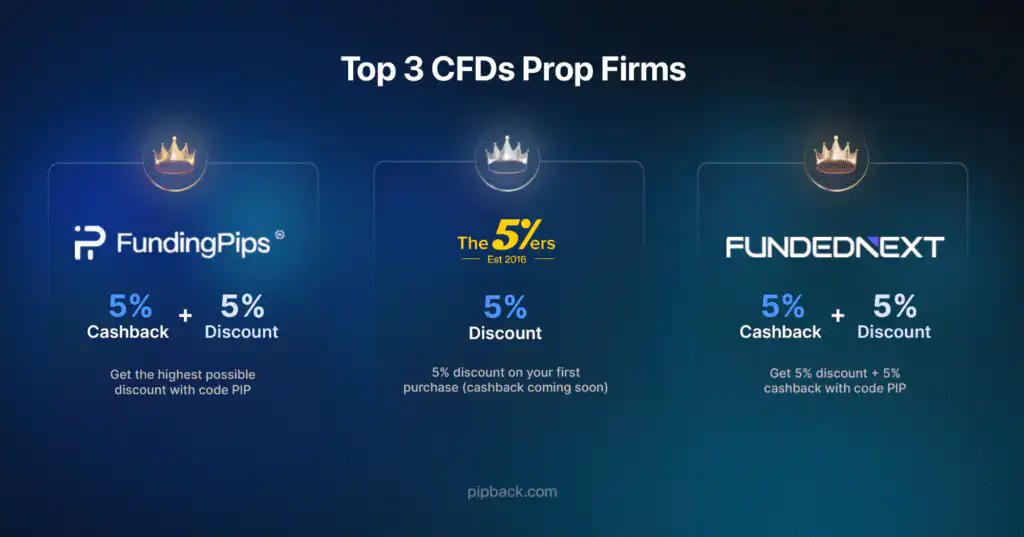
We’ve partnered with them to allow you to not only save money by offering the highest industry discounts. Take advantage of our discounts for top firms like MyFundedFutures and FundedNext Futures while honing your trading skills with our guides.
FAQs
- Where do prop firms get their money from?
Prop firms get money from one-off challenge fees and monthly subscription fees paid by traders. In rare cases, they also earn money by A-booking their profitable traders and copying their trades. Prop firms don’t earn anything from commissions, spreads, or profit splits. Everything is done in a simulated environment, where no real money is involved.
- Do prop firms use real money?
No, prop firm trading is done in a simulated (demo) environment, where no real money is involved. You are provided with a simulated account, from which you can then earn profits.
- Are prop firms a pyramid/Ponzi scheme?
Not exactly. But some do resemble ones, in the way they rely on their main income coming from unprofitable traders purchasing challenges. The sustainability depends on how the firm reinvests revenue. If invested correctly and with the right intentions, this makes prop firms very sustainable.
- What happens if I lose money on a funded account? Do I have to pay it back?
No, prop firms provide demo accounts, and traders never lose real money, so they don’t owe anything if they lose the evaluation.If traders fail their challenge, they can pay for a new challenge or a “reset” fee.